
What if your next coaching decision started with a clear view of an athlete’s progress, not a search through spreadsheets, chat threads, and scorecards? The right professional gym coaching software can bring workout results and gym operations into a more manageable workflow, while keeping coaching conversations at the center.
If athlete records are scattered and manual scoring keeps pulling you away from the floor, you’re not alone. A useful system should make performance information easier to collect and discuss, not add another layer of admin or overwhelm members with data. It should also fit the routines your gym already depends on.
This 2026 guide helps you assess software against practical coaching needs: how it handles athlete data, workout scoring, payments, and day-to-day gym management; what makes performance dashboards useful; and what to ask about migrating existing records. You’ll also see how a platform such as VO2WOD brings together a Live Athlete Performance Dashboard, automated workout scoring and payments, Vo2hub, and data migration support, so you can evaluate the workflow rather than just the feature list.
Key Takeaways
- Assess professional gym coaching software by how well it supports coach-athlete workflows, performance records, and gym operations, not by whether it resembles a consumer workout app.
- Use workout scores as a starting point for coaching conversations. Consider context before deciding what a result means or how to respond.
- Compare tools against your team’s daily needs, including athlete visibility, scoring, administration, migration, and support, rather than choosing by feature count.
- Plan a software transition in stages: map workflows, audit records, confirm what can move, train users, and check adoption and record accuracy.
- See how VO2WOD brings together a Live Athlete Performance Dashboard, Vo2hub, automated workout scoring, payment processing, and gym management.
What professional gym coaching software should help coaches do
Professional gym coaching software supports the work around training: recording athlete results, reviewing performance over time, and keeping essential gym operations organized. The goal isn’t to turn coaching into data entry. It’s to make useful information easier to find, so coaches spend less time piecing together records and more time deciding what an athlete may need.
Without a shared workflow, workout notes may live in one place, scores in another, and athlete details in spreadsheets or admin tools. That makes it harder to spot patterns or bring the right context into a conversation. Tracking technology builds on the idea behind Quantified Self: collecting information about activity. But a record is only a starting point. A score shows what happened, not why. Coaches still need to interpret effort, experience, goals, and the circumstances around the workout.
Which coaching tasks can software support?
Look for a clear path from recording a workout result to reviewing it later. Centralized performance records can help a coach and athlete discuss progress using shared information rather than relying on memory alone. Some platforms also automate workout scoring or display athlete performance metrics in real time. Treat these as specific capabilities to verify, not features to assume every system includes.
Other features, such as wearable-device connections, custom programming, or messaging, may matter to your gym, but availability varies. Ask what the software supports, what data it captures, and whether the information fits your actual coaching routine. The practical test is whether it helps your team review results and make informed coaching decisions.
How is coaching software different from gym management software?
Coaching workflows center on athletes: workout results, performance records, and information used in coach-athlete discussions. Gym management workflows center on running the facility, including memberships, billing, payments, and administrative tasks. The functions can overlap, but a tool built mainly for membership administration may not offer the performance visibility coaches need. A coaching-focused tool may not cover the operational work that keeps a gym organized.
Some facilities need both functions, ideally in a workflow that avoids unnecessary duplication. Before choosing, list what coaches and administrators do each day. Then check which system supports each task and where staff would still need to enter information twice. For a closer look at operational needs, see this functional fitness gym software guide.
How performance tracking and workout scoring support better coaching
Tracking earns its place when it helps a coach move from a result to a useful response. Record the workout, review the result, consider the conditions, then decide what feedback or adjustment makes sense. Professional gym coaching software can help keep those steps connected, but the coach supplies the judgment.
Useful performance data is information tied to a specific coaching decision. A time, load, completion status, or other score matters when it helps answer a practical question: should the athlete repeat the effort, adjust the next session, or recognize progress? This is the promise of the evolution of coaching technology: making information available to support coaching, not replacing the human relationship behind it.
Which performance metrics are useful to coaches?
Start with results that relate to your programming. Depending on the workout, that may mean a time, load, repetitions, or whether the athlete completed the prescribed work. Heart-rate data can add another perspective if the system supports it and the gym has a reliable way to collect it. Don’t assume every platform records the same information. Confirm which metrics are available and how they’re displayed.
Context gives a result meaning. Compare an athlete’s performance with their relevant history while considering experience, workout design, modifications, and session conditions. A slower time doesn’t automatically signal a setback. The athlete may have used a different load or followed a different version of the workout. Avoid applying universal benchmarks when an individual comparison better answers the coaching question.
A live dashboard can make selected metrics visible during a session, giving coaches a way to review performance as it’s recorded. Before relying on that view, ask which metrics appear, how the dashboard is set up, and whether it supports the data you need. VO2WOD’s Live Athlete Performance Dashboard displays athlete performance metrics in real time. Confirm the current metrics and display setup with the provider.
What makes automated workout scoring useful?
Automation can reduce repetitive score collection and help organize results for later review. It’s most useful when the process fits the workouts your gym actually runs and coaches can spot or correct an inaccurate entry. Ask which workout formats are supported, how score corrections work, and what oversight coaches retain.
A score is an input, not the coaching conversation. Use it to notice a pattern or open a discussion, then invite the athlete’s account of the effort. If you’re comparing ways to bring scoring and performance visibility into your gym workflow, you can explore the VO2WOD platform.
How to compare professional gym coaching software without buying by feature count
A longer feature list doesn’t guarantee an easier coaching day. Another platform adds value only if it reduces friction or makes useful information easier for coaches and athletes to see. Compare tools against the work your team actually does, and give more weight to functions that matter every day.
The best-fit system is the one coaches and athletes can use consistently. Use this framework to compare options, then adjust priorities to match your gym’s staff roles and member experience.
| Area | Questions to ask | What to look for |
|---|---|---|
| Coach workflow | Can coaches move through a typical class workflow without unnecessary steps? | A clear route from workout setup to reviewing results. |
| Athlete visibility | What can athletes see, and how is access managed? | Performance information that members can understand and use. |
| Scoring | Which workout formats and score types are supported? How are errors corrected? | Scoring that fits your programming, with a clear way to review entries. |
| Administration | Which recurring tasks are handled in the platform, and which still need staff action? | Less duplicate entry across coaching and operational workflows. |
| Migration | Which existing records can move, and how will accuracy be checked? | A defined migration scope and a practical verification process. |
| Support | What help is available during setup and ongoing use? | Clear answers about the support process and who can access it. |
Which questions should gym owners ask during a software demo?
Ask a coach to demonstrate a real class sequence, from preparing the workout through reviewing athlete results. Have them show what an athlete sees and explain how access is managed. Then ask which tasks happen automatically and which require staff input. Pay attention to the handoffs. A workflow that looks smooth in a presentation may still leave coaches re-entering scores or administrators chasing missing details.
How can a gym test usability before committing?
Give coaches and operations staff the same realistic scenario and ask them to complete it independently. For example, follow one workout from setup through score entry, correction, review, and any related administrative handoff. Compare where each person hesitates. Check dashboard readability, how easy it is to fix a mistaken score, and whether the next staff member can find the information they need.
Pay attention to what the test reveals about shared records, not just individual features. This centralized gym data platform guide offers more context for evaluating how information moves between gym workflows. For professional gym coaching software, the deciding question is practical: will your team choose to use it as part of the day without adding another layer of work?
How to prepare coaches and athletes for a software transition
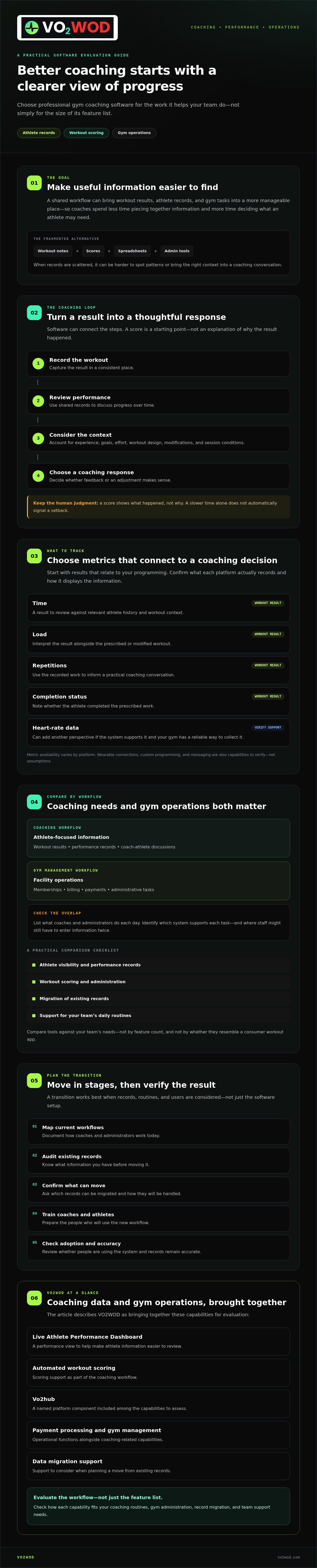
A smooth change starts before anyone logs in. Map the current workflow, audit the records your gym relies on, confirm what can move, train the people who will use the system, and review adoption after launch. This sequence gives coaches and members a clearer path through the change without assuming every record or routine will transfer as-is.
What should a gym confirm before migrating its data?
Make an inventory of the information staff need to keep using, such as athlete profiles, workout history, and relevant membership or payment records. Then ask the provider to confirm which records and formats are supported, what falls outside the migration scope, and who handles each step. Don’t assume every record can be transferred.
Agree in advance how missing fields, duplicates, and other exceptions will be flagged. Decide who will compare a sample of migrated records against the originals and how corrections will be handled. Coaches should know what moved and how to check its accuracy, especially before using historical results in a coaching conversation.
Confirm the expected timeline, responsibilities on both sides, and what assistance is available. Ask when staff should stop updating the old system and begin using the new one. VO2WOD offers data migration support, but gyms should verify which records can be migrated and the current process before planning a transition.
How can staff adoption feel manageable?
Start with a small set of repeatable tasks instead of asking the team to learn every feature at once. Choose a coaching workflow and an administrative workflow, then assign clear roles for entering, reviewing, and correcting information. After launch, invite feedback and use actual points of friction to guide further training.
Give athletes a simple explanation of what’s changing, where they’ll find relevant information, and whom to ask if they’re unsure. Keep the message practical and consistent across coaches.
- Before launch: explain why the gym is changing systems and when the new process begins.
- For coaches: show how to complete core tasks and verify migrated athlete records.
- For athletes: describe what they’ll need to do differently and how to get help.
- After launch: collect questions, note recurring issues, and adjust guidance accordingly.
Plan the transition as carefully as the software evaluation. To learn more about migration support and gym operations, explore the VO2WOD platform.
How VO2WOD brings coaching data and gym operations together
After defining what your coaches and members need, consider whether one platform can connect performance information with essential gym operations. VO2WOD is an option for functional fitness facilities looking to bring those areas together. Its capabilities include a Live Athlete Performance Dashboard, Vo2hub, automated workout scoring, automated payments, gym management, and data migration support.
Which VO2WOD capabilities connect to a coach’s work?
The Live Athlete Performance Dashboard displays athlete performance metrics in real time. That visibility can give coaches a shared reference point for reviewing results and talking with athletes. Confirm which metrics are currently available and how the dashboard is displayed to see whether it fits your coaching routine.
Vo2hub centralizes workout data, giving coaches and members a place to refer to workout information. Automated workout scoring can help organize recorded results and reduce manual score collection. Payment processing and gym management address operational needs alongside coaching workflows. These features support the work around training, but they don’t interpret an athlete’s effort or replace a coach’s judgment.
What to explore before choosing VO2WOD
Use your evaluation criteria to test fit, not just review a feature list. Bring the people who handle coaching and administration into the conversation. Walk through a typical class workflow, discuss which records matter to your team, and ask how the platform supports your staff’s responsibilities.
If you’re considering a transition, discuss migration requirements directly. VO2WOD offers data migration support, but confirm which athlete, workout, membership, or payment records are supported, what the process involves, and what your team needs to prepare. Clarify how migrated information can be checked before staff rely on it.
A thoughtful review can help you decide whether professional gym coaching software will make daily work clearer for coaches and members. Compare the platform’s current capabilities with your actual workflows, then identify any details that need confirmation before choosing.
Explore the VO2WOD platform and assess how its coaching and gym operations capabilities fit your facility.
Choose a workflow that gives coaches room to coach
The right professional gym coaching software should make athlete information easier to use, not simply add another place to manage it. Look for performance records and scoring that support coaching decisions, then compare options against your team’s daily workflows and members’ needs. A useful score needs context, and a smooth transition depends on knowing what can migrate and how records will be checked.
VO2WOD brings coaching and gym operations together through a Live Athlete Performance Dashboard for real-time performance visibility, automated workout scoring, and payment processing. It also offers data migration support, with the specific records and process to confirm directly before a transition.
Take your workflow checklist into the next evaluation. Consider how coaches will review results, which administrative tasks need support, and what your staff will need during a system change. Then Explore VO2WOD and see how it could fit your gym. The right choice can make information easier to act on and leave more room for the conversations that make coaching personal.
Frequently Asked Questions
What is professional gym coaching software?
Professional gym coaching software helps coaches manage athlete-related workflows and performance information. Depending on the platform, it may support workout result tracking, scoring, dashboards, communication, or operational tasks. It isn’t automatically the same as a consumer training app or a complete gym management system. Before choosing, compare the actual capabilities with your coaches’ daily work, the information athletes need to see, and the administrative tasks your facility wants to manage.
How do I choose coaching software for a functional fitness gym?
Start by identifying the workflows that create the most friction, such as capturing workout scores or reviewing athlete progress. Compare options for coach usability, athlete access, reporting, administration, migration support, and staff training. Ask coaches to test realistic scenarios, such as recording and reviewing results after a class. Prioritize functions your team will use consistently instead of choosing a platform simply because its feature list is longer.
Can gym coaching software track athlete performance in real time?
Some platforms provide live dashboards that display selected performance metrics during a workout. Available metrics, supported devices, screen setup, and update timing vary, so confirm those details with the provider. For example, VO2WOD’s Live Athlete Performance Dashboard displays athlete performance metrics in real time. A live view can make information easier to see, but coaches still need to interpret it in context and avoid treating one metric as a complete picture.
Is automated workout scoring accurate?
Automated scoring can organize and process submitted workout results, but accuracy depends on how the system handles workout formats, score entry, corrections, and unusual cases. Ask for a demonstration using workouts your gym actually runs. Confirm who can edit a result and how errors are reviewed. Treat automation as a tool for consistent recordkeeping, with coach oversight where interpretation matters. Check that the scoring workflow fits your programming before relying on it.
What happens to gym data when switching coaching software?
Data transfer depends on which records the new provider supports and the condition of your existing information. Before switching, inventory the records your gym needs, ask which formats and fields can move, and confirm how exceptions will be handled. Then plan time to check migrated records and prepare staff to use the new workflow. Don’t assume every historical field will transfer. Ask the provider to explain the migration process and its scope.
Does professional gym coaching software replace a coach?
No. Software can help capture results, organize records, and make selected information easier to review, but it can’t understand an athlete’s full circumstances or replace human encouragement and judgment. Coaches remain responsible for interpreting information and applying their expertise to feedback and programming decisions. The strongest fit is a system that reduces repetitive work while leaving more room for meaningful coach-athlete interaction, not one that treats scores as a substitute for conversation.
Can gym management software handle coaching and payments in one platform?
Some platforms combine coaching-related features with administrative tools such as payment processing, but the scope varies. Check whether the platform supports the coaching workflows, scoring, and payment tasks your gym needs, and ask how records and staff roles work across those areas. VO2WOD combines gym management with automated workout scoring and payment processing. Compare the complete day-to-day workflow rather than relying on an “all-in-one” label.


