
The best gym management platform isn’t necessarily the one with the longest feature list. It’s the one that makes daily work simpler for your team and members. When comparing options, look beyond the demo: identify the features you’ll use regularly, consider how staff will learn the system, and plan for the work of switching.
Start with how your gym operates. Do you need simpler administration, clearer payment workflows, functional fitness scoring, performance tracking, or a better fit across several of these areas? This guide offers a practical way to prioritize needs, compare platforms, and plan for data migration and member adoption before making a change.
We’ll compare several gym management options, including VO2WOD, with a focus on operational fit. VO2WOD combines gym management tools with automated workout scoring, performance data, and migration assistance for functional fitness facilities. Use the guidance to build a shortlist around your priorities and plan a deliberate transition.
Key Takeaways
- Track recurring workflow problems before comparing platforms, so a change addresses a real operating need.
- Separate essential features from optional ones, then compare usability, evidence, and transition effort.
- Choose a gym management platform based on your gym’s priorities, not an unsupported overall ranking.
- Plan for data, workflows, staff communication, and timing. VO2WOD provides professional data migration assistance for transitions from legacy systems.
- Consider VO2WOD when functional fitness scoring and athlete performance data matter alongside gym administration.
Why Look for a Gym Software Alternative? Start With the Friction
Changing gym software is an operational decision, not a casual feature upgrade. Your platform affects staff routines, member interactions, payments, and the records coaches use. Before exploring alternatives, identify the tasks that repeatedly create extra work. A long feature list won’t solve the wrong problem.
For a typical week, record where each task starts, who handles it, what information they need, and whether anyone has to repeat or re-enter work. Review administration, workout scoring, payments, performance data, and member workflows. For example, coaches entering scores in one place while members look for results elsewhere may point to disconnected tools. Repeated payment follow-up or staff re-entering member details suggests a different gap.
- Repeated manual tasks: Which routine jobs take several steps or depend on someone remembering to do them?
- Disconnected information: Do staff switch between tools to find member, payment, or workout details?
- Member friction: Do members struggle to book, pay, or follow workout progress?
- Coach visibility: Can coaches access the scoring and performance information they need?
Not every annoyance calls for new software. A feature may already exist but be hard to find, a workflow may lack a clear owner, or staff may be following different steps for the same task. Compare the platform’s capabilities with how your team uses it. If better setup or a consistent process resolves the problem, switching may add disruption without fixing the cause. If a needed function is missing or a recurring workaround affects staff or members, it’s worth comparing alternatives.
Which signs suggest your current gym software no longer fits?
Look for patterns rather than isolated frustrations. One awkward task may be minor; a recurring issue that slows check-in, delays score entry, or prompts members to ask staff for information can affect the daily experience. Identify whether the problem is missing functionality, unclear workflows, or inconsistent adoption. The answer helps you decide whether to change a process, provide staff guidance, or evaluate different software.
What should a functional fitness gym prioritize?
Start with the work that defines your operation: workout scoring, member-facing performance data, payments, and administration. Mark each need as essential or optional, then note who uses it and how often. A feature designed around a different gym model may not help if it doesn’t support your coaches’ routines or members’ experience. For broader category context, explore this functional fitness gym software guidance. The Fitness App Wikipedia overview also provides general context on how fitness technology can support activities such as tracking and engagement.
The right fit depends on your gym’s needs, team habits, member experience, and capacity for transition. Define those first, then compare alternatives against evidence and day-to-day operating fit rather than the number of features a platform lists.
How to Evaluate a Zen Planner Alternative for Your Gym
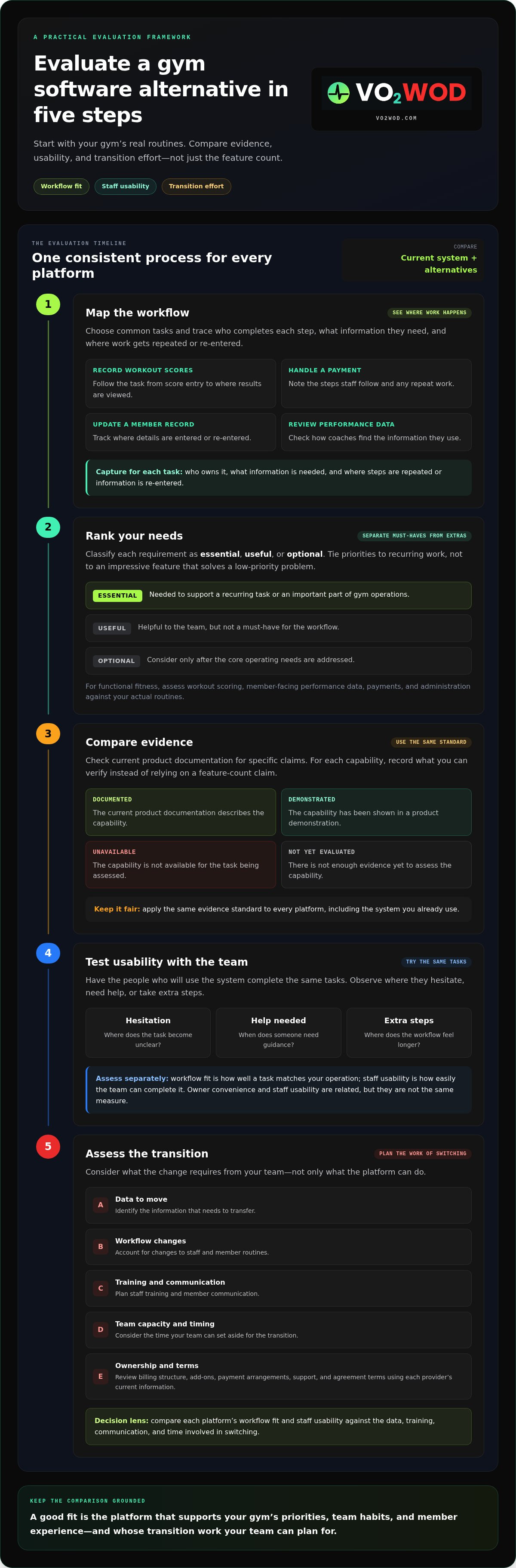
Start with your gym, not a vendor’s feature count. Use the same steps to assess every platform, including your current one. A consistent process makes it easier to see whether a tool fits your real routines and whether its benefits justify the work of switching.
- Map the workflow. Choose common tasks, such as recording workout scores, handling a payment, updating a member record, or reviewing performance data. Note who completes each step and where information gets re-entered.
- Rank your needs. Mark each requirement as essential, useful, or optional. Tie must-haves to recurring work instead of letting an impressive but low-priority feature steer the decision.
- Compare evidence. Use current product documentation for specific claims. Record whether each capability is documented, demonstrated, unavailable, or not yet evaluated. Apply the same standard to every platform.
- Test usability. Have the people who will use the system try the same tasks. Note where they hesitate, need help, or take extra steps. Owner convenience and staff usability are related, but they aren’t the same measure.
- Assess the transition. Consider the data to move, workflow changes, staff training, member communication, and time your team can set aside. Review ownership considerations such as billing structure, add-ons, payment arrangements, support, and agreement terms using each provider’s current information.
Which features matter most in functional fitness software?
For a functional fitness gym, assess how workout scoring fits into coaching routines, how performance results are recorded and viewed, and how members access relevant data. Then review administration and payments: do everyday tasks connect clearly, or will staff still need separate steps and tools? Add categories such as marketing, integrations, or facility access only when they address a real need. The Fitness Industry Technology Council offers broader context on technology adoption in fitness, but your own workflows should set the priorities.
How can you compare platforms without relying on feature-count claims?
Build a side-by-side matrix. Put your chosen tasks in rows and each platform in a column. For every task, record the evidence status and a brief note about how it works. Then assess two things separately: workflow fit, or how well the task matches your operation, and staff usability, or how easily the team can complete it. A platform with fewer listed features may be a better fit if it handles essential work with less friction.
Compare the full operating picture, not just software capabilities. Consider staff time, training, data transition, payment arrangements, and terms described in current documentation. Keep assumptions separate from verified details. If functional fitness scoring and performance tracking rank highly, include VO2WOD’s gym management and performance-tracking platform in the same evidence-based comparison.
Zen Planner Alternatives Compared: Match the Platform to Your Priorities
A useful comparison shows what to investigate, not who wins a generic ranking. Use the table to shortlist potential solutions against the work that matters most in your gym. The notes highlight specific platform capabilities compared to standard industry themes; they aren't a complete feature audit. Review current product documentation before relying on a specific capability.
| Priority | Option A | Option B | Option C | VO2WOD |
|---|---|---|---|---|
| Gym fit | Assess fit against your gym's daily workflows using current product materials. | Its comparison page emphasizes management and engagement. | Its page emphasizes member management and self-service. | Designed for functional fitness facilities. |
| Scoring | Verify how current tools fit your scoring routine. | Check current documentation for your scoring needs. | Check current documentation for your scoring needs. | Automated workout scoring. |
| Performance data | Assess how results are recorded and viewed. | Its page emphasizes performance tracking. | Review current documentation for your coaching workflow. | Live dashboard with real-time workout metrics and scoring; Vo2hub centralizes workout data. |
| Payments | Review current payment tools and arrangements. | Verify current payment capabilities. | Its page emphasizes payments. | Automated payments. |
| Administration | Compare administration tools with your routine tasks. | Its page emphasizes management and automation. | Its page emphasizes analytics and member management. | Gym administration tools. |
| Migration | Review current transition information. | Review current transition information. | Review current transition information. | Professional data migration assistance. |
| Evidence status | Verify specifics in current product documentation. | Page emphasis only; verify specific capabilities. | Page emphasis only; verify specific capabilities. | Capabilities listed above are confirmed. |
How do the alternatives differ by operational priority?
Alternative platforms often emphasize general management, marketing, automation, engagement, and performance tracking. Others focus primarily on member management, analytics, payments, and self-service features. Treat these varying emphases as starting points rather than proof that a given platform handles your exact workflow. For broader context on fitness businesses and industry priorities, consult The Health & Fitness Association.
When might VO2WOD belong on your shortlist?
VO2WOD belongs on the shortlist when functional fitness operations and performance data are priorities. Its gym management platform includes automated payments and workout scoring. Vo2hub centralizes workout data and supports member engagement, while the Live Athlete Performance Dashboard gives coaches real-time workout metrics and scoring. Evaluate these capabilities alongside broader business management needs.
For a fair comparison, choose a real task, such as entering a score and viewing the resulting workout information, and assess each platform against it. Compare performance workflows with the administrative needs that keep the business running. Use the same evidence standard for every option, and consult gym management software comparison guidance for complementary category context. This keeps your zen planner alternative shortlist focused on operational fit, not a vendor's preferred feature count.
How to Switch Gym Software Without Losing Control of the Transition
Moving to a zen planner alternative doesn’t mean you have to change everything at once, but the switch needs a plan. Treat it as an operational project, with clear ownership for data, workflows, staff communication, and timing. A shared plan helps everyone understand what’s changing and what still needs attention.
VO2WOD provides professional data migration assistance for gyms moving from legacy systems. Decide which information your gym needs, how staff will use it, and how new routines will be introduced. Migration support is one part of a successful transition, alongside the practical preparation your team does.
What should a gym prepare before moving its data?
Start with an inventory of the information your team uses for daily operations, such as member records, payment details, workout results, and performance history. Identify what must carry over for ongoing work and which records need review before the move. Keep the inventory practical. The goal is continuity for key workflows, not transferring information simply because it exists.
Next, map the routines connected to that information. A coach may enter scores after class, while an administrator handles member updates and payments. Record who does what now, what will change in the new platform, and where staff may need to learn a new step. Assign an owner to each part of the transition and agree on how questions or issues will be recorded and resolved.
- Information: Identify member, payment, workout, and performance records relevant to your operations.
- Workflows: Document the staff and member tasks that depend on those records.
- Responsibilities: Assign owners for data, staff preparation, and member communication.
- Timing: Choose a transition window your team can support, and plan how to handle routine tasks during the change.
How can owners support staff and member adoption?
Adoption starts with helping people understand their tasks, not with a tour of every feature. Map each role to its regular work: coaches may need to record or review workout results, while administrative staff may handle member and payment workflows. Orient each group around those tasks. Give members clear, focused information about any actions they’ll need to take in the new system.
Make room for feedback as the new routines begin. Ask staff to flag confusing steps, record unresolved questions, and describe where a process differs from the plan. Review those notes regularly so small points of friction don’t become routine. A considered rollout helps the team build confidence while acknowledging that some details may need adjustment.
Explore VO2WOD’s data migration assistance as part of planning your transition.
Consider VO2WOD as a Zen Planner Alternative for Functional Fitness
A functional fitness gym may need its management system to do more than keep administration moving. Workout scoring and athlete performance data can be central to coaching and member engagement. If these needs rank highly in your comparison, VO2WOD is a zen planner alternative to evaluate.
Rather than asking which platform has more features, assess whether its capabilities support the work your team does each day. Consider the scoring routine after class, the information coaches need to review, the data members engage with, and the administrative tasks that support the gym. Assess these needs together instead of judging a system by one standout feature.
What does VO2WOD bring to a functional fitness gym?
VO2WOD combines gym management with tools centered on workout data. Automated workout scoring supports the gym’s scoring workflow. The Live Athlete Performance Dashboard gives coaches a real-time view of workout metrics and scoring. Vo2hub centralizes workout data and supports member engagement. The platform also includes automated payments and gym administration tools. Compare these capabilities with your routines, from recording scores to managing day-to-day operations.
This combination is useful when performance workflows and administration need to work together. Assess how workout scoring fits into the coach’s routine, whether the dashboard presents the metrics coaches need, and how Vo2hub’s centralized workout data supports member engagement. Focus on actual use: a feature matters when it addresses a priority you’ve identified.
Switching also involves the information and routines your gym already depends on. VO2WOD provides professional data migration assistance for gyms transitioning from legacy systems. Include that support in your transition plan, alongside deciding which records matter, assigning responsibilities, and preparing staff and members for workflow changes. A plan based on your gym’s data and operating needs helps keep the move organized.
How can you decide whether VO2WOD fits your shortlist?
Return to your ranked requirements and assess each capability against a real task. Start with the essentials, then consider how the platform serves coaches, owners, and members. Coaches may focus on workout results and scoring; owners may prioritize administration and payments; members may value engagement with workout data. Reviewing all three perspectives helps show how well the platform fits and which requirements need more evaluation.
- For coaches: Assess automated scoring and the live dashboard’s workout metrics and scoring.
- For owners: Compare gym administration and automated payments with your operating routines.
- For members: Consider how Vo2hub’s centralized workout data supports engagement.
- For the transition: Include migration assistance in your plan, alongside staff and member adoption.
Keep the decision specific. Compare VO2WOD with your must-haves, not a generic feature checklist. Review the VO2WOD platform overview and explore a demonstration to see how its workflows relate to your gym’s priorities.
Choose the Next Step That Fits Your Gym
Before choosing a zen planner alternative, define what a better day-to-day operation would look like. Picture a typical week after the change: which tasks should be clearer, what information should be easier to use, and where should staff spend less effort moving between steps? These expectations give you a practical way to judge fit beyond the feature list.
Keep those priorities visible as you build your shortlist. A platform should support the routines your gym values, and the transition plan should be realistic for the people who will use it. For a functional fitness facility, consider administration and athlete performance needs together rather than treating them as separate decisions.
VO2WOD brings functional fitness gym management and performance tracking together, with professional migration assistance for legacy-system transitions. Compare its capabilities with your ranked requirements, then explore the VO2WOD platform and see how it fits your gym.
Frequently Asked Questions
Is Zen Planner a good fit for every functional fitness gym?
No single platform is the right fit for every gym. Zen Planner may suit your operation if its current capabilities support how staff manage members, classes, payments, and workout records. Test it against a typical workday: can coaches and administrators complete key tasks without workarounds? Compare current product documentation with your routines, and distinguish a missing capability from a setup or training issue.
What should I look for in a Zen Planner alternative?
Look for a zen planner alternative that fits your gym’s daily work, not just one with an appealing feature list. Map a specific task, such as a coach recording a workout result, then assess scoring, performance data, payments, administration, and usability for staff and members. Include transition needs too. A platform that handles essential workflows clearly may be more useful than one with extra tools your gym rarely uses.
Can I migrate my gym data from Zen Planner to another platform?
Yes. Moving gym data is a common part of changing software, and the work depends on what information your gym needs to carry forward and how it’s organized. Identify relevant member, payment, workout, and performance records, then map how staff use them. VO2WOD provides professional data migration assistance for transitions from legacy systems. Plan the move with clear responsibilities and review points rather than assuming every record or workflow will transfer automatically.
How do I compare gym management software without choosing by price alone?
Compare total operating fit, not only the subscription figure. List essential tasks, then assess documented capabilities, staff usability, payment arrangements, support information, and the effort required to adopt the system. A lower-cost option may still demand extra manual steps for a workflow your gym relies on. Include each platform’s current terms and capabilities in your comparison, and distinguish verified details from assumptions.
Does VO2WOD include workout scoring and athlete performance tracking?
Yes. VO2WOD includes automated workout scoring and a Live Athlete Performance Dashboard that gives coaches a real-time view of workout metrics and scoring. These tools are part of a broader gym management and performance-tracking platform. To assess the fit, consider a real coaching task: what information does the coach need to see, and how does scoring fit into the gym’s routine?
How can I reduce disruption when changing gym management software?
Prepare people and processes before the switch. Inventory the records your gym uses, assign an owner to each transition task, and note which staff roles will follow changed workflows. Tell members what actions they may need to take and when. After the change, gather questions from coaches and administrators and track unresolved issues. This gives the team a practical way to adapt without assuming the transition will be effortless.
Is VO2WOD designed for functional fitness gyms?
Yes. VO2WOD is a gym management and performance-tracking platform tailored to functional fitness facilities. It brings together gym administration, automated workout scoring, and athlete performance information. Compare these capabilities with the routines your coaches, administrators, and members rely on to see how they address your priorities.


