

What if your leaderboard could spark friendly competition without creating more work for coaches or leaving newer athletes feeling out of place? The right functional fitness leaderboard software makes workout results easy to see, scores easier to manage, and progress worth celebrating at every level.
Rankings can motivate members, but only when the process feels clear and consistent. If scores are scattered across notes or spreadsheets, workout rules are unclear, or one leaderboard highlights only the top performers, trust and participation can slip. Look for a system that organizes results and makes it easier to recognize different kinds of progress.
This 2026 buyer’s guide covers the features that matter, from score entry and live displays to member engagement and gym-management workflows. You’ll also see how VO2WOD brings automated workout scoring together with a Live Athlete Performance Dashboard, while Vo2hub centralizes workout data. Use the guidance to compare systems and choose an approach that keeps results understandable, competition constructive, and daily routines manageable.
Key Takeaways
- Choose functional fitness leaderboard software that supports your regular classes, not only competitions or individual workout logs.
- Set clear scoring rules and show enough workout context for members to understand how results are ranked.
- Make competition more inclusive by recognizing progress in ways that work for different abilities, not only through one overall ranking.
- Introduce the leaderboard gradually: align coaches on score entry, begin with familiar workouts, then review how members respond.
- Consider how leaderboard tools fit with wider gym-management workflows to reduce scattered records and routine administration.
What Functional Fitness Leaderboard Software Should Do for Your Gym
Functional fitness leaderboard software records, organizes, and displays members’ workout results so a gym can review performance and share rankings. It turns individual scores into a clear view of a workout, whether the results are shown to a class or made available for members to review later. Since functional training uses varied movements and workout formats, the scoring context matters. For a broader overview, see What is functional fitness?
A gym leaderboard serves a different purpose from event rankings or an individual workout-tracking app. Event rankings organize competitors around a specific competition. Personal tracking tools focus on an individual’s own logs. A gym leaderboard supports recurring classes and shared workouts, helping members see results in the context of their training community.
The value isn’t simply putting names in order. Visible results give a class a shared reference point, make progress easier to notice, and can replace scorekeeping in scattered notes or spreadsheets. Rankings are one coaching aid, not a complete measure of an athlete’s capability. They don’t capture every factor that matters, including movement quality, consistency, effort, or personal circumstances. Used thoughtfully, they can support coaching and connection without defining anyone by a number.
How a functional fitness leaderboard works
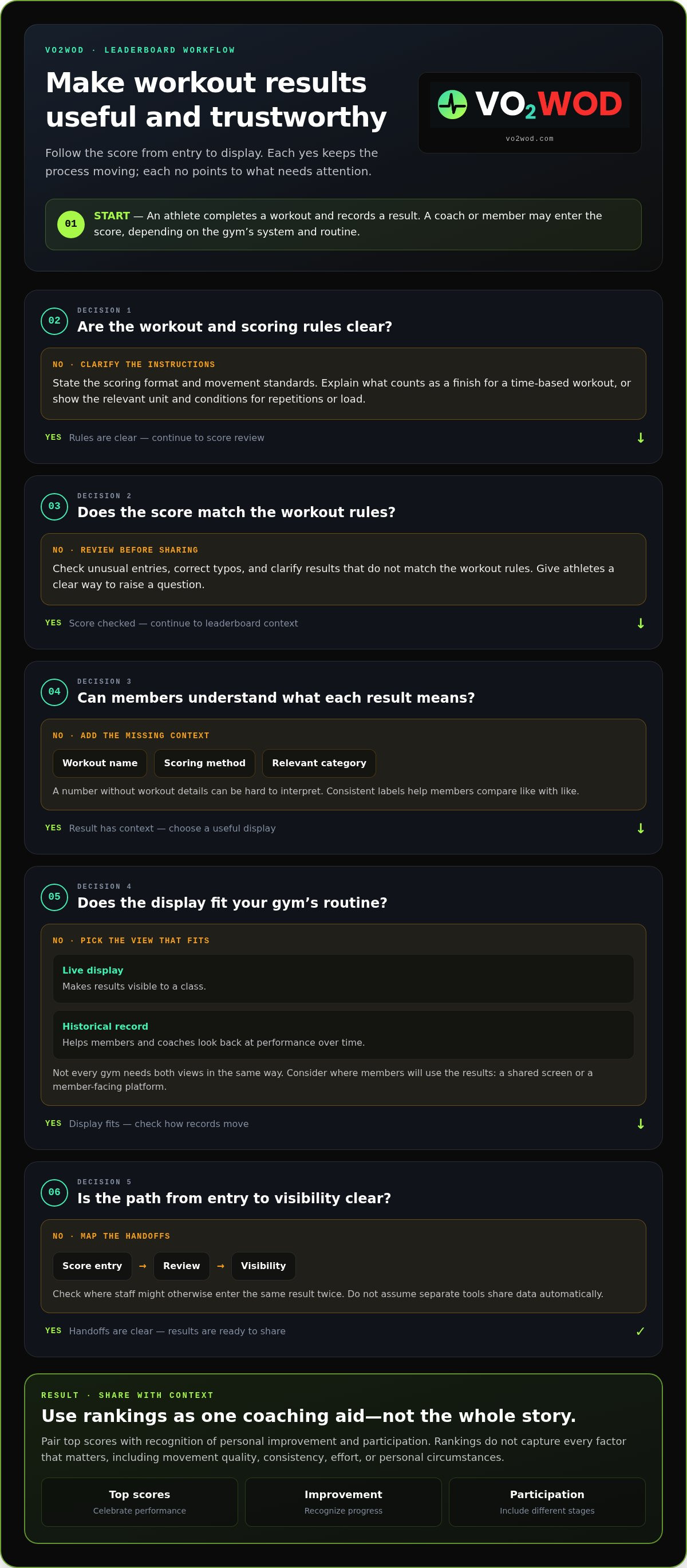
The typical process begins when an athlete completes a workout and records a result. Depending on the system and gym’s routine, a coach or member enters the score, checks it for accuracy, and makes it visible on a leaderboard. Automated workout scoring can reduce repetitive administration, while a review step gives coaches a chance to resolve unclear or incorrect entries.
The workout format and scoring rules shape what members see. A time-based workout might rank finish times, while a workout scored by repetitions or load would show those results differently. Clear labels and rules help athletes understand what a result means and prevent confusion when scores are compared.
Who benefits from gym leaderboard software?
Owners get a more consistent way to keep workout records and encourage member engagement. Coaches can spend less class time gathering scores and more time guiding athletes, while still reviewing results to inform conversations about progress. Members benefit from accessible results and a better understanding of where they stand, provided the leaderboard offers an appropriate challenge rather than pressure to compete at all costs.
For a welcoming experience, pair rankings with context. Coaches can recognize personal improvement and participation alongside top scores. That keeps the leaderboard useful for athletes at different stages and makes competition one part of the gym community, not its only measure of success.
Which Leaderboard Features Make Workout Results Useful and Trustworthy?
A polished screen can catch the eye, but trust comes from the work behind it: clear workout details, consistent scoring rules, and a reliable way to review results. For functional fitness leaderboard software to be useful day after day, members need to understand what they’re seeing and coaches need confidence that scores have been recorded correctly.
Scoring accuracy, review, and useful context
Start with the workout instructions. Members need to know the scoring format, movement standards, and any details that affect how a result is recorded. If a workout is scored by time, for example, explain what counts as a finish. For a workout scored by repetitions or load, show the relevant unit and conditions. Consistent instructions help members compare like with like.
Build a simple review habit into the process before results are shared. Coaches can check unusual entries, correct typos, and clarify scores that don’t match the workout’s rules. This brief check helps protect the integrity of the board. It also gives athletes a clear way to raise a question without turning a ranking into a source of friction.
Context matters as much as the score. Display the workout name, scoring method, and any relevant category alongside the result. A number without workout details can be hard to interpret. For broader exercise science resources, the American College of Sports Medicine offers a useful reference point for fitness professionals.
Displays and data that support coaching
A live display can make results visible to a class, while a historical record can help members and coaches look back at performance over time. Not every gym needs both in the same way. Choose the view that fits your routine, and make sure rankings are easy to read where members will use them, whether that’s a shared screen or a member-facing platform.
Connected records can reduce duplicate entry when score capture and performance records are part of a coordinated workflow. Don’t assume that separate tools share data automatically. Consider how information moves through the process, from score entry to review and visibility, and where staff might otherwise have to enter the same result twice.
VO2WOD brings automated workout scoring together with a Live Athlete Performance Dashboard that visualizes athlete performance in real time. Coaches can use that view to guide conversations while keeping their judgment and knowledge of each athlete at the center. Explore live athlete performance metrics for more on how performance visibility can support engagement. To see how scoring and visibility fit into a gym platform, explore VO2WOD’s gym software.
How to Compare Leaderboard Software Without Sacrificing Member Trust
A leaderboard can add energy to a class, but a ranking alone can’t guarantee fair scoring or motivate every athlete. Compare the process behind the display: how scores are entered and reviewed, what context members can see, and whether results fit smoothly into the gym’s existing routines. Look for capabilities you can evaluate in practice, rather than assuming software will make competition fair or change member behavior on its own.
Can leaderboards motivate beginners as well as competitors?
Motivation varies. Experienced athletes may enjoy comparing competitive results, while newer members may find a single all-gym ranking discouraging. A board that only highlights top scores can leave other kinds of progress out of view.
Consider recognizing consistency and personal improvement alongside workout rankings. If a system supports categories, divisions, or personal progress views, these can add useful context. Coaches also shape the experience: present rankings as one feedback tool, not a judgment of someone’s ability or worth. No display can replace a thoughtful conversation with an athlete.
A practical comparison framework for gym owners
Use the same questions to compare each option. Separate essentials, the features needed to run classes reliably, from extras that may suit a particular member mix or gym routine.
| Area | What to compare | Essential or optional? |
|---|---|---|
| Scoring workflow | Can staff record scores consistently, review entries, and correct mistakes? | Essential for trustworthy results. |
| Display | Are rankings readable in the setting where members will view them? | Essential if you plan to show results during class; display choices may vary. |
| Member context | Can results show workout details, categories, or personal progress? | Workout context is essential; additional views depend on your community. |
| Administration | Does scorekeeping fit existing coach and gym workflows, or create duplicate entry? | Essential for everyday use; broader platform features depend on your needs. |
Then test the workflow against a familiar class: who enters each result, who checks it, and how members see it. This practical walkthrough can reveal friction that a feature list hides. Consider whether records remain accessible within the wider gym system instead of becoming another isolated set of scores. For a broader view of platform fit, explore functional fitness gym software.
The right functional fitness leaderboard software supports clear records and a welcoming experience. Choose capabilities your gym will use consistently, and treat optional features as useful only when they serve your members and workflow.
How to Introduce a Gym Leaderboard Into Your Workout Routine
A leaderboard works best when it becomes a simple part of class, not another task coaches have to carry. Start with a clear purpose, then build a score-entry habit around workouts your team already knows.
- Choose a goal: Decide whether you want to make results easier to review, encourage participation, or help members track progress.
- Define scoring: Set the workout format, scoring conventions, and movement standards members need to understand.
- Prepare coaches: Agree on who enters scores, who reviews them, and how corrections are handled.
- Launch simply: Begin with familiar workouts, then share results using a display that suits your gym.
- Review the process: Look at score completion, coach workload, and member feedback, not just the rankings.
Prepare workout standards and coach workflows
Before inviting submissions, make workout descriptions and scoring rules easy to follow. If a result is based on time, repetitions, or load, establish a consistent way to record it. Assign responsibility for checking entries and resolving corrections so coaches know who owns each follow-up.
Keep each step brief enough to fit naturally around class. A useful test is whether a coach can explain the scoring, record a result, and flag a question without pulling focus from athletes. If not, simplify the process before expanding the leaderboard to more workouts.
Launch, gather feedback, and improve
Tell members what the board shows, how scores are reviewed, and how to read their results. Explain its purpose and limits too: rankings are one way to view workout performance, not a complete picture of an athlete or a requirement to compete. This clarity helps establish a welcoming tone from the start.
After launch, ask coaches where score entry fits smoothly and where it interrupts class. Ask members whether the display feels clear, useful, and encouraging. If participation is low or a particular view creates pressure, adjust what you show and how you recognize effort. Consistent score completion and manageable administration are useful signs of adoption, alongside member feedback.
As your process grows, consider how workout records fit with the rest of your gym operations. This guide to centralized gym data platforms explores how connected records can reduce fragmented workflows. Functional fitness leaderboard software should make the routine easier to sustain, not add another layer of manual tracking. Explore VO2WOD’s gym platform to see how automated workout scoring can support that workflow.
How VO2WOD Connects Workout Scoring With Performance Visibility
A leaderboard is more useful when scores sit within the gym’s wider coaching and administration workflow. VO2WOD is a gym-management and performance-tracking platform for functional fitness facilities. Its automated workout scoring and Live Athlete Performance Dashboard bring score organization and performance visibility into the same broader platform.
From workout scores to a live performance view
Automated workout scoring helps organize results, while the Live Athlete Performance Dashboard visualizes athlete performance in real time. Together, these capabilities support a clear path from workout results to a view coaches can use to follow performance. The dashboard makes results visible; coaches bring the context, experience, and judgment needed to interpret them.
Vo2hub centralizes workout data and supports member engagement. This helps bring workout information into a more organized setting instead of leaving coaches and members to piece it together from scattered records. For gyms comparing functional fitness leaderboard software, consider how scoring, performance visibility, and member engagement fit into daily routines, not simply how rankings look on a screen.
The platform also supports gym management and payments. Bringing performance tools together with gym administration helps owners consider the leaderboard as part of their overall operating setup, rather than an isolated scorekeeping task. Assess each capability against your gym’s workflow and member needs.
Make the transition feel manageable
Changing systems can feel like a heavy lift when workout scores, member information, and other records are spread across different places. VO2WOD offers data migration assistance to help gyms transition from existing systems. This support can make the move more manageable and give the team a clearer starting point for organizing gym data.
As you assess fit, focus on the connection between scoring, performance visibility, member engagement, and gym operations. VO2WOD brings these capabilities together in a platform designed for functional fitness facilities. Explore the VO2WOD platform.
Choose a Leaderboard That Fits Your Gym
The right functional fitness leaderboard software does more than show who finished fastest. It makes scoring clear, keeps results organized, and helps competition feel welcoming across different ability levels. Choose a workflow coaches can maintain, explain the scoring rules, and look beyond rankings to see whether members are engaging and progress is being recognized.
VO2WOD connects automated workout scoring with a Live Athlete Performance Dashboard that visualizes performance in real time. Vo2hub centralizes workout data and supports member engagement, while gym-management capabilities bring performance tools into a broader operational platform. VO2WOD also offers data migration assistance for gyms moving from existing systems.
Ready to explore a more connected approach to workout scoring and gym operations? Explore VO2WOD’s connected gym and performance platform to take the next step toward clearer results and a more engaged training community.
Frequently Asked Questions
What is functional fitness leaderboard software?
Functional fitness leaderboard software helps a gym record, organize, and display members’ workout results. Depending on the platform, it may connect score entry with performance views or other gym workflows. That differs from an event website, which publishes standings for a specific competition, and a personal workout app, which primarily tracks one athlete. Compare score entry, review, display, and administration features against your gym’s needs.
How does leaderboard software calculate workout scores?
Score calculation depends on the workout format and the rules set for that workout. A system may organize submitted results, but comparisons still rely on clear standards and accurate entries. For example, coaches should explain whether a workout is scored by time, repetitions, or load, then review entries for mistakes. Keep workout instructions visible so members understand what each result represents and how it should be recorded.
Can a gym leaderboard motivate beginners?
Yes, a leaderboard can support beginners when coaches present it as one view of progress, not a judgment of ability. A single overall ranking may not suit every experience level. Where the software allows, gyms can also recognize consistency, personal improvement, or results within relevant workout categories. Keep the purpose clear, invite member feedback, and use the board to encourage participation and learning rather than pressure athletes to compete.
What features should functional fitness leaderboard software have?
Start with reliable score entry, clear workout context, a way to review results, and a display that suits your gym. Then consider whether the platform connects scores with performance views, member engagement, and everyday administration. Prioritize features that reduce fragmented recordkeeping and fit coaches’ routines. A polished display can help results stand out, but a consistent scoring workflow is what makes them understandable and trusted.
Are live gym leaderboards fair for every athlete?
Not automatically. Fair comparisons depend on clear workout standards, accurate scores, and enough context for members to understand the results. Coaches can use categories or other relevant comparisons where available, and balance competitive rankings with recognition of personal progress and consistency. Explain how scores are used, correct entry mistakes, and listen to feedback. A leaderboard can support a welcoming environment, but it can’t replace individual coaching judgment.
How can a gym switch to leaderboard software without losing workout data?
Start by identifying the member and workout records you want to preserve, then plan how data will be mapped, moved, and reviewed before changing daily workflows. Give coaches and members clear information about the transition and what to expect. VO2WOD offers professional data migration assistance to help gyms move data from existing systems to its platform, making the transition easier to organize.


